AI-Supported Decision Optimisation for Grid-Independent EV Charging Stations
Team: Fariba Dehghan, Professor Sebastian Stein, Dr Vahid Yazdanpanah, Dr Stephanie Gauthier
As electric vehicles become increasingly integrated into everyday life, an important question is becoming more urgent: how can they be charged reliably in locations where the electricity grid is limited, unreliable, or unavailable? This project examines the future of grid-independent EV charging stations powered by local renewable energy sources, such as solar panels, wind turbines, and battery storage. Operating these stations is a complex challenge. Solar and wind generation are variable, battery capacity is limited, backup generation can be costly, and drivers arrive at different times with different charging needs. Consider a busy evening when several vehicles arrive at once, solar generation is declining, and the station does not have enough stored energy to fully charge every vehicle. In such situations, the station must make difficult decisions: which vehicles should be prioritised, how much energy each vehicle should receive, when stored energy or backup generation should be used, and how prices or incentives should be designed.
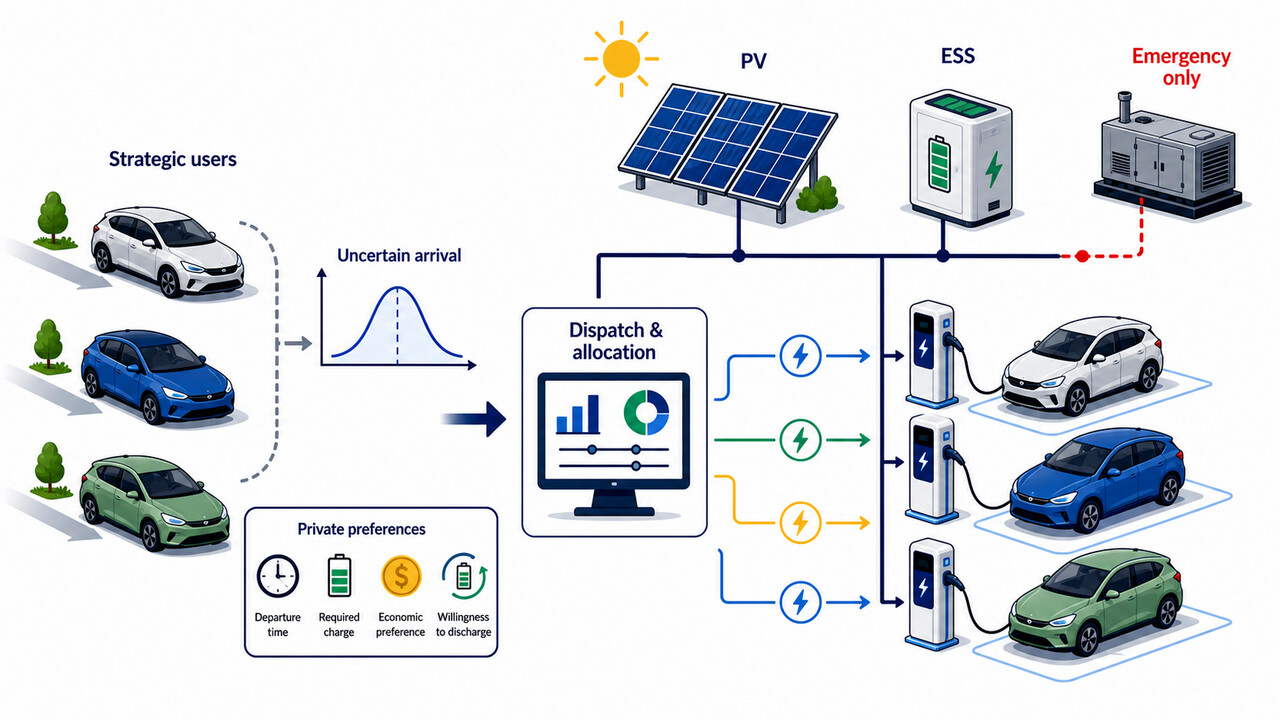
This PhD project investigates how artificial intelligence can support charging stations in making these decisions intelligently, efficiently, and fairly. By learning from historical patterns and responding to real-time conditions, AI can help optimise charging schedules, manage battery storage, forecast demand, and balance cost, efficiency, environmental impact, and user satisfaction. The research also considers how drivers may behave strategically, for example by misreporting their charging needs or deadlines to improve their chances of receiving service. The overall aim is to develop smarter off-grid EV charging systems that are reliable, affordable, fair, and environmentally sustainable. Such systems could play an important role in expanding clean transport infrastructure, particularly in rural areas, remote locations, service stations, campuses, and other places where connection to the national grid is costly or technically challenging.